Introduction
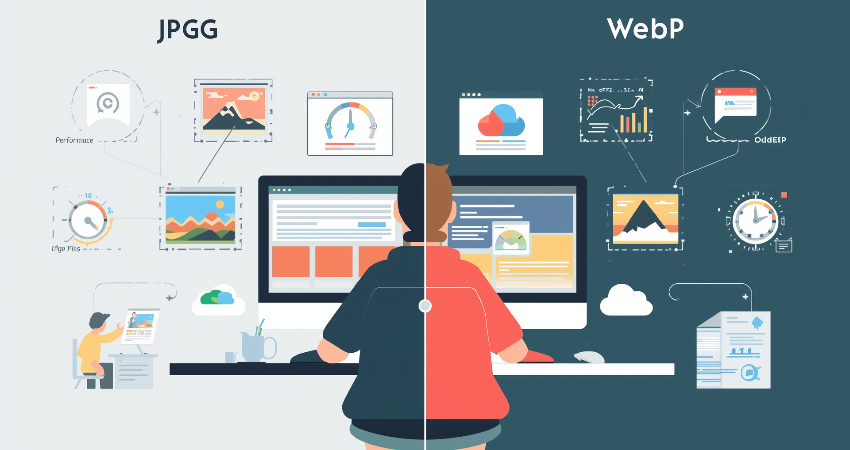
A lot rides on performance in web development. Websites are expected to load in a blink, perform well everywhere, and deliver a good experience even on limited bandwidth. Among the most neglected yet essential aspects affecting site speed is optimizing images. For years, JPEG has been the preferred format for compressing photographic content for display on the web, with decent image quality and reasonable file size, making it a venerable standby for developers and designers alike. But with the changing times, greater demands are made on any given file format. Enter WebP, Google’s modern format and a nascent contender for developers-for its compression and quality advantages.
The transition from JPEG to WebP is not just a fad, but also part of the major paradigm shift in how performance is being prioritized in the web space. Developers used to accept the commonly-used formats across devices, but now they are yearning for efficiency, speed, and visual excellence. WebP answers these requirements by a dramatic reduction in file sizes without affecting quality to produce faster load times, less bandwidth use, and ultimately, the best user experience. It is thus inevitable that in order to remain competitive in the SEO-driven, user-first era of the web, any developer turns to WebP so it is a smart move or necessary.
The Limitations of JPEG in Modern Web Development
Quality Loss Through Compression
The JPEG standard has been an image compression format for the web since time immemorial. JPEG is somewhat synonymous with being lossily compressed. Therefore, the process of losing important visual details during compression is important to stress-in particular, in highly contrasted areas or upon repeated compressions. Such degradation is all the more visible on retina or high-DPI screens, where imperfections of extra-quality become magnified. It does relieve saving JPEGS into higher quality in lesser compressed modes, but larger files reduce page load speed and performance, and so it’s not really the way to go.
Transparency is another key shortcoming of JPEG. Designers engaged in modern web applications that depend on layered designs, semi-transparent UI components, or complex animations find themselves at a great disadvantage with a format that does not support alpha channels. In those cases, developers have to cross between file formats, usually resorting to PNG for transparency and JPEG for smaller size. This has made the development process complicated and can add on some extra weight to the overall page. As visualization expectations grow, JPEG’s shortcomings become ever-more problematic.
Lack of Versatility and Flexibility
Beyond rendering and delivery issues, JPEG lacks the flexibility for web usage today. Its image files support only 8-bit in the color department; no animation or transparency, leaving it ill-suited for any of the current interactive design patterns. Today, web pages are dynamic ecosystems with hover states, animated transitions, and user interactions that should be supported by adaptable imaging solutions. However, JPEG is rigid and fairly outdated by these standards, failing to comply with modern requirements without the aid of other formats or scripts, thus burdening development work with increased complexity.
To highlight, JPEG is nerveless without some built-in efficiencies for responsive design. Developers have begun to realize that JPEG can no longer be the answer to an era in which images have to be delivered flexibly and efficiently. Techniques such as srcset and picture elements can help alleviate the burden. In effect, these solutions are almost an afterthought to the more serious shortcomings of JPEG. Rather, the newer formats have taken into account these factors from the very start of their development, thus being more flexible with the demands of present-day development.
What Is WebP and How It Works
Technical Foundation of WebP
WebP is a modern image format that is designed by google specifically to help improve performance on the web through better image compression. WebP supports lossy and lossless compression, thus allowing developers to achieve maximum quality with minimal size. WebP is different from JPEG, which is an 8-bit-only depth; it supports 24-bit RGB color with an 8-bit alpha for transparency. This is important for layered web designs and interactive content. It allows seamless integration along with the design, rather than on different file types.
Both methods produce images via predictive coding-wherein an image is encoded by predicting values of a pixel based on neighboring pixel values, and only encoding their differences. This efficient technique yields awesomely smaller file sizes without a visible compromise in quality. WebP images are usually, on average, 25-34% smaller than corresponding JPEG ones and up to 26% more efficient than PNG in lossless modes. Such savings go a long way into ensuring quick load time and, no less, lightening server usage and bandwidth consumption, all of which are vital in modern days for performance optimizers among developers.
Advanced Capabilities of WebP
In addition to being compressed, WebP has other modern features for today’s web design applications. For example, WebP supports transparency (alpha channel) in the lossy mode, which means that no loss is to be incurred by JPEG and PNG because of this. So, in designing, UI developers don’t have to find workarounds to create complex effects, nor do they have to rely on lots of image files as a means. WebP features an animated version, which makes it an efficient alternative to a format like GIF which weighs heavily. That is because one format- WebP- can serve many purposes: photography, transparency design, and lightweight, movable animation. This makes asset management so easy for developers.
WebP is also peculiar concerning the support it offers for metadata, including the ICC color profile, XMP, and Exif. This provides benefits for workflows that may have image categorization, color calibration, or SEO image tagging requirements. WebP naturally works with modern HTML elements such as <picture> and srcset for fully responsive images. All these make WebP not only an option for JPEG but also a more all-encompassing solution for image delivering functionalities on the modern web. Hence, It’s not surprising that there is a growing tendency among developers to adopt WebP as their format of choice in performance-driven designs.
Benefits of WebP Over JPEG
Improved Performance and SEO
The overriding reason to migrate from JPEG to WebP is, of course, amazing performance enhancements. Smaller in size, WebP images translate to lesser page weight and hence faster load times. Faster-loading websites are bound to make users happy, but they rank higher on the search results. According to Google, page speed does matter for ranking, and it is emphasized for mobile searches. Switching to WebP is an easy yet powerful way to enhance Core Web Vitals like Largest Contentful Paint (LCP) and Time to Interactive (TTI), extremely important for SEO.
With support for transparency and animation, developers can use fewer image formats. This means a smaller code base and fewer HTTP requests. Less requests and payload weights result in improved render times and Time to First Byte (TTFB); these performance gains matter in real terms for highly trafficked applications like e-commerce, news media, or online portfolios-more engagement, longer session duration, and conversions. So ditching JPEG for WebP is a win-win for both SEO and usability.
Reduced Bandwidth and Hosting Costs
Smaller image sizes speed up the transmission flow and even save on bandwidth. This has added value for websites with heavy traffic or audiences that reach worldwide, as the bandwidth costs can easily add up. Storage and data transfer are commonly how hosting providers charge. With WebP, developers can reduce image file sizes by about 30-50%, which potentially translates to huge savings on hosting costs. Startups or small businesses operating on shoestring budgets needing that high performance without incurring high operational spending will find this very beneficial.
For content delivery networks (CDNs) and edge servers, small payloads equate to low latency, making for quick delivery to these end-users. WebP efficiency will allow such systems to cache an increasingly higher number of images in memory, thus improving performance. Not only does it benefit users with limited data plans or access to slower internet connections, but it also offers a much smoother and faster experience while browsing. In conclusion, WebP is not about putting one engine into high gear at the expense of others; it is indeed about creating a better experience for all: server admin to end-user.
Adoption Challenges and How Developers Overcome Them
Browser Compatibility and Fallback Strategies
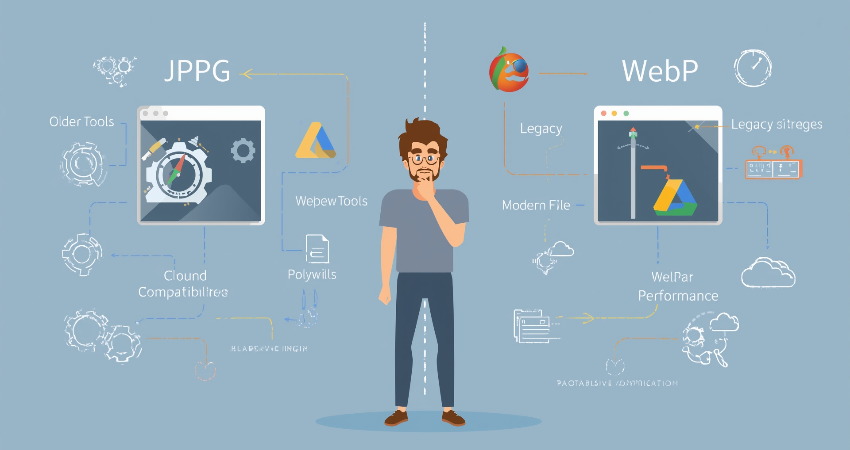
Presently almost all modern browsers like Chrome, Firefox, Edge as well as Opera accept WebP; nonetheless, quite a lot of legacy browsers, particularly older versions of Safari and Internet Explorer, are not fully endowed with it. This indeed creates troublesome moments in making things work as really cross-browser compatible for the developers. But it’s not as if there aren’t effective ways to handle it. Probably the most common is the <picture> element, providing different source tags for each browser to pick the most suitable format. This allows for backward compatibility with no performance drawback on WebP.
Another fallback strategy is server-side content negotiation. This means that it will detect the capabilities of the user’s browser and send WebP images to those that support it, and JPEG or PNG to those which do not. Although somewhat more complex to set up, it provides a seamless experience across all platforms. However, there exist other tools like Squoosh, ImageMagick, and Webpack loaders that can be used to auto-generate and serve multiple image formats, alleviating the adoption of WebP in large projects even for developers.
Developer Tooling and Workflow Integration
When we think about operational and workflow angle, the web could provide several challenges that could arise while shifting from JPEG to WebP. Not all of the designer tools or CMS platforms out there provide native support for WebP, thereby creating a transition friction. This scenario, however, is changing quite fast. Support for WebP has been introduced natively on software such as Photoshop (with the plugins), Figma, and CMS platforms, including WordPress. With build tools such as Gulp, Webpack, and Vite, JPEGs can also be automatically converted to WebP in the course of the build, making optimization an integral part of the CI/CD pipeline.
And for CDN services like Cloudinary, Imgix, or Fastly, the same automatic format negotiation applies where images can be converted dynamically into WebP on-the-fly along with user-agent detection. This considerably minimizes manual optimization and guarantees the best format serves each visitor. As the WebP ecosystem matures, adoption becomes less about capabilities and more about a willingness to embrace performance-oriented best practices. If given the right tools and mindset, developers can rise above any early hurdles and tap into the full potential of WebP.
Conclusion
Switching from JPEG to WebP is an entire overhaul in developers’ minds with respect to performance, user experience, and web sustainability. JPEG has ultimately served the web very well for decades, but its limitations are appearing larger and larger today in such a fast-paced digital world. WebP offers an efficient, flexible, and modern answer to every need that goes with contemporary web development. With reduced file sizes, improved features of transparency and animation, and all-around support from modern tools and browsers, WebP is fast becoming the new standard for web image delivery.
Concerning those developers wanting to optimize their sites for speed, SEO, and mobile performance, converting to WebP is not merely a good idea but serious business for a change towards unadulterated user-centric experiences that strong digital products offer today. Last but not least, this technology’s hurdles continue to melt away with increased support from browser vendors and the development tools that are catching on to being WebP-friendly. The future of web imagery is now! And it is light and nimble and chic—just like the WebP!