Remove Unused CSS for Lightning-Fast Front-Ends

Introduction Speed, in a nutshell, is the one crucial ingredient of modern web performance. With instant gratification now the order of the day, anything that barely delays or jitters the user’s digital experience is simply unacceptable. An aggravated bounce rate, a drop in conversion, and a displeased user are all just a few seconds away with […]
Code Splitting Explained for Web Performance Beginners

Introduction For today’s fast-paced digital atmosphere, users expect websites to load quickly and perform efficiently. Long loading times can frustrate any user and repel them, regardless of whether they are using a desktop or handheld device. Code splitting can be quoted as one of the most powerful solutions to server performance. Even though this terminology can […]
How Browsers Handle the Critical Rendering Path
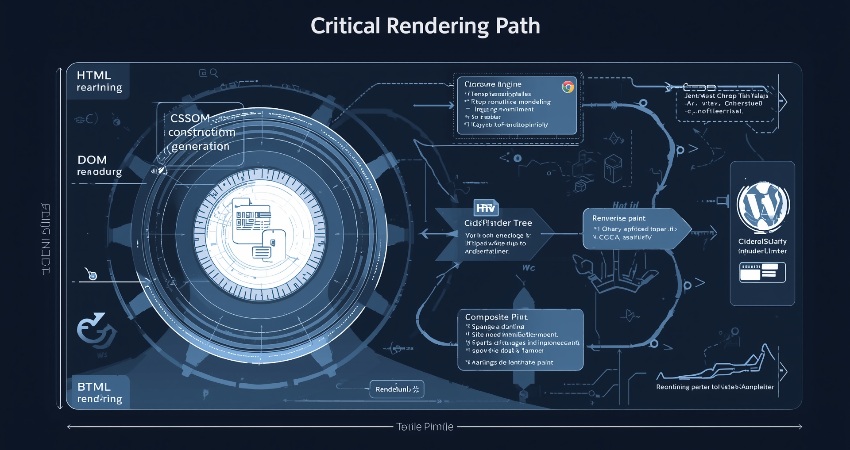
Introduction to the Critical Rendering Path Taking into consideration everything up to October 2023, the Critical Rendering Path (CRP) represents the various steps in the algorithm of a browser to render a web page out of HTML, CSS, and JavaScript into a complete, visible page. In the process of optimization for loading performance, the CRP constitutes […]
Why Web Developers Are Switching from JPEG to WebP
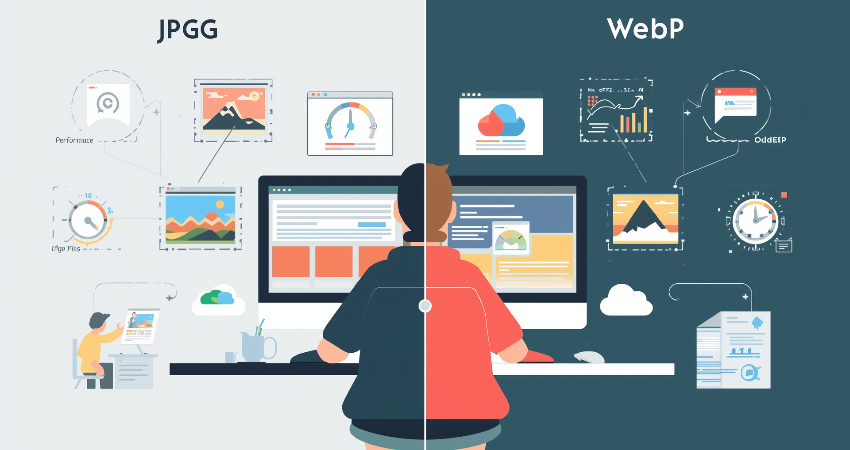
Introduction A lot rides on performance in web development. Websites are expected to load in a blink, perform well everywhere, and deliver a good experience even on limited bandwidth. Among the most neglected yet essential aspects affecting site speed is optimizing images. For years, JPEG has been the preferred format for compressing photographic content for display […]
How to Load Fonts Efficiently Across All Browsers

Introduction In contemporary web design, typography is not only a determination of styles; now it has become part of user experience, performance, accessibility, and much more. Different browsers have their unique ways of supporting, loading styles, and quite puzzlingly, performance oddities when it comes to font loads. About Google Fonts, Adobe Fonts, or other self-hosted files, […]
Choosing Async or Defer for Fast TTI

Introduction The most crucial factor in optimizing the performance of a website is Time to Interactive (TTI)-the measurement of how quickly the user can interact with the page after its initial load. In today’s fast-paced digital environment, a website that loads slowly and is unresponsive can dent user experience, increase bounce rates, and subsequently plateaus conversion […]
How to Measure Page Requests and Details That Slow You Down

Introduction It is a fundamental aspect of user experience to know the influences on load time; this sets the context for some interesting technical engagements. If it’s just a blog or a full-fledged web app, every millisecond counts. Users expect almost instantaneous performance, and speed is a factor in search engine rankings. One of the best […]
Using CSS Grid to Prevent Layout Jumps

Introduction UX has organized itself as a central consideration in the current disposition of web development for ensuring successful digital products. Users are aware of layout shifts, popularly termed “layout jumps,” almost as one of the most disillusioning events. Layout jumps happen as the sudden and furtive relocation of page content during loading times or […]
Top File Compression Tools to Improve Website Speed

Introduction: Why Website Speed Matters in the Digital Age Time is precious for the high-paced world of the internet. Visitors have impatient fingers ready to click on something else before a blink of an eye if a website does not load quickly. Research indicates that users will leave any site that takes longer than three seconds […]
Understanding Lossy vs Lossless Compression

Introduction Compression is extremely precious these days as we live in an age where multimedia content is increasing exponentially and is constantly challenging the storage capability. Compression is a technique that reduces a file’s size irrespective of whether it is an image, video, audio, or document, so that the data can be stored, transmitted, or […]